If you have ever walked Aspen’s West End and felt like the neighborhood tells its story block by block, you are not imagining it. This is one of Aspen’s most visually legible residential areas, where modest mining-era homes, grand Victorian houses, and later modern architecture all remain part of the streetscape. If you are buying, selling, or simply trying to understand what gives the West End its appeal, this guide will help you read the neighborhood more clearly. Let’s dive in.
West End Architecture at a Glance
Aspen’s West End is defined by more than individual houses. According to the Aspen Historical Society, it is a quiet, tree-lined neighborhood bordered by Aspen Meadows, the Aspen Institute, and the Wheeler/Stallard Museum campuses, with historic homes ranging from Victorian to midcentury modern.
What stands out is the sense of layering. Instead of one uniform style, you see an architectural timeline that still feels intact. That mix is a big part of why the West End feels distinct from many other parts of town.
Aspen’s preservation framework also treats the setting as part of the neighborhood’s character. Streets, alleys, irrigation ditches, setbacks, and mature trees are not viewed as leftover details. They are part of the visual structure that helps the West End remain recognizable over time.
How the West End Evolved
Mining-Era Cabins Came First
Aspen’s early residential story began with practical, modest homes tied to the mining era. The city’s Historic Preservation Design Guidelines identify the vernacular Miner’s Cottage, dating from about 1880 to 1893, as a common historic resource that still remains in Aspen.
These homes were built for function first. Their simpler forms help explain the earliest architectural layer in the West End and in Aspen more broadly. Even when they have been updated over time, they still reflect the town’s earliest development pattern.
Victorian Homes Shaped the Next Era
A major shift came after the horse-drawn streetcar line arrived in 1889. The city notes that construction spread along Main Street and into the West End, where some of Aspen’s largest Victorian-era homes were built between 1888 and 1893.
This period gave the neighborhood many of its most visually prominent historic residences. The result is a richer and more formal architectural layer that still helps define the West End today.
Several West End-area landmarks listed in the city inventory reflect that legacy, including the Wheeler-Stallard House at 620 W. Bleeker, Pioneer Park at 442 W. Bleeker, the Davis Waite House at 234 W. Francis, and the Hallet House at 432 W. Francis. These homes help explain why the neighborhood often feels older and more architecturally readable than other parts of Aspen.
Postwar Modernism Added a New Chapter
The West End did not stop evolving after the Victorian era. AspenModern’s historical survey identifies a substantial amount of Aspen’s postwar architecture as Bauhaus Modern or Wrightian Modern, and it notes that many modern chalets were built in the West End.
That survey also documents West End work by Herbert Bayer, Francis Rew Stanton, and Victor Lundy. This matters because it shows that modern architecture in the neighborhood is not an interruption of the story. It is part of the story.
Aspen’s design guidelines note that some postwar buildings were intentionally set at angles on their lots, and many chalets were oriented toward Aspen Mountain. That design approach differs from the earlier Victorian fabric, but it still adds to the layered identity that makes the West End so compelling.
What Makes West End Architecture Feel Different
The Neighborhood Reads as a Whole
In the West End, the architectural experience is not limited to what sits inside each property line. Aspen’s guidelines specifically recognize streets, alleys, ditches, and access patterns as character-defining features.
That means the neighborhood’s appeal comes from the relationship between buildings and their setting. The spacing of homes, the rhythm of blocks, the mature landscape, and even visible infrastructure all contribute to the sense of place.
Preservation Supports Visual Continuity
Aspen discourages development that removes a platted street or alley, reroutes historic access patterns, or overplants a ditch so heavily that its historic character disappears. The goal is not to freeze the neighborhood in time, but to keep its historic structure legible.
For you as a buyer or seller, that helps explain why the West End tends to feel composed. Change still happens, but it is guided carefully. That is very different from a neighborhood where each redevelopment resets the visual identity of the block.
Variety, Not Sameness, Drives Appeal
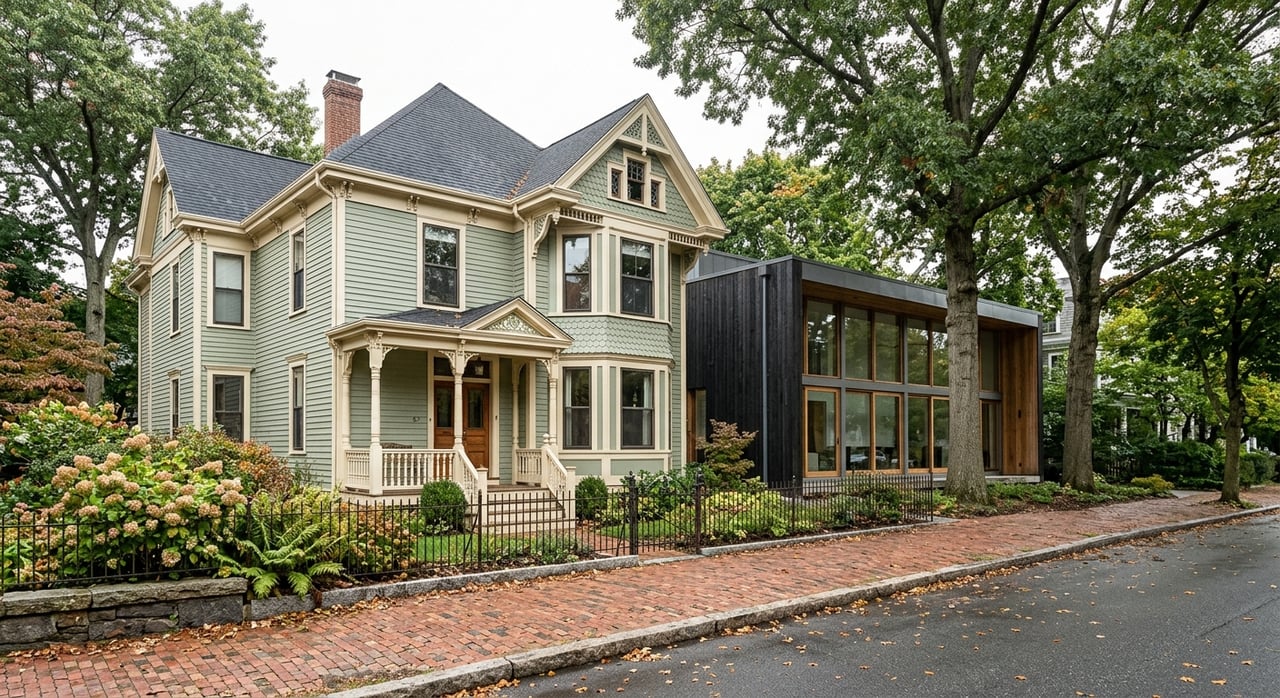
One of the West End’s strengths is that it never feels one-note. You can see modest mining-era forms, more elaborate Victorian architecture, and thoughtful postwar modern homes within the same broader district.
That variety gives the neighborhood depth. It also creates a kind of authenticity that is difficult to replicate in newer residential areas.
Preservation Rules and Real Ownership
Historic Status Changes the Process
Aspen says it has engaged in historic preservation since the early 1970s, with its first preservation guidelines adopted in 1972 and later revised. The city also does not impose a minimum age for designation, which means later 20th-century modern houses can also become protected historic resources.
If a property is individually designated or falls within a historic district boundary on the Planning and Zoning map, the review process changes. Aspen states that most exterior work requires design review and a land use case, and its FAQ says all exterior work, plus some interior work, must be reviewed and approved before work begins.
Many Projects Need Review
This is where buyers need to be especially clear-eyed. Aspen’s FAQ specifically names window replacement, masonry painting, structural framing changes, HVAC changes, and penetrations through historic material as examples of work that require review before starting.
In practical terms, a historic or potentially historic West End home may come with more process than a similar home in another area. That is not necessarily a drawback, but it does affect timelines, budgeting, and the scope of future improvements.
Additions Must Stay Secondary
Aspen’s guidelines say additions to historic buildings must be compatible, subordinate, deferential, and visually distinguishable from the historic structure. The city also states that imitation of the original historic style is not allowed.
That rule helps preserve architectural honesty. New work can coexist with old work, but it should read as a later layer rather than a copy. In a neighborhood like the West End, that distinction plays an important role in maintaining authenticity.
Site Planning Still Matters
Preservation review in Aspen goes beyond the building itself. The guidelines discourage new curb cuts when alley access is possible and place importance on preserving the legibility of alleys, ditches, and other site features.
If you are evaluating a property for renovation or expansion, these details matter early. A site that looks straightforward on paper may involve more design constraints once its historic context is considered.
Fire-Hardening and Preservation Both Apply
Aspen’s wildfire guidance says historically designated buildings may receive exceptions where strict compliance would damage historic features. At the same time, those properties still must comply with the historic-preservation code and design standards.
That means owners may need to balance safety upgrades with preservation requirements. It is another reason why careful planning is important before work begins.
Why West End Homes Often Command a Premium
Scarcity Matters
The West End premium is not just about square footage. It is better understood as a mix of limited supply, a highly protected in-town setting, and architecture that feels genuinely rooted in Aspen’s history.
When a neighborhood has a finite number of character-rich properties and a structured review process that limits dramatic change, scarcity tends to become part of the value equation. Buyers are often responding to what cannot easily be recreated.
Character Holds Value
Colorado preservation research reports that local historic districts typically stabilize and strengthen neighborhoods and often enhance property values. Aspen’s preservation materials also state that the program helps protect community investments and preserve character.
For the West End, that connection is fairly intuitive. Buyers are not just purchasing a house. They are buying into a setting where authenticity has been protected over time.
Controlled Change Creates Confidence
The West End is not frozen. It has evolved from miner’s cottages to Victorian houses to thoughtfully designed modern homes. What makes it rare is that each new layer has been shaped by a framework that respects what came before.
That balance often gives buyers confidence in the long-term feel of the neighborhood. For sellers, it also helps explain why well-positioned West End properties can attract such strong interest.
What Buyers Should Notice
If you are considering a home in the West End, it helps to look beyond finishes and floor plans. Pay attention to the broader architectural and regulatory context.
A few practical questions can help:
- Is the property individually designated, or is it within a historic district boundary?
- What architectural era does the home represent?
- Have prior additions or renovations been handled in a way that reads clearly and appropriately?
- How do alleys, access patterns, setbacks, trees, or ditches affect the site?
- If you plan to renovate, what level of review might be required?
In this neighborhood, due diligence is not just about condition. It is also about understanding what you are stewarding and what future change may realistically involve.
What Sellers Should Understand
If you own a West End property, your home’s architectural story may be one of its greatest strengths. Buyers in this part of Aspen often respond to originality, historical legibility, and the sense that a property belongs to its setting.
That means presentation matters. A thoughtful marketing approach should explain not only the home itself, but also its place within the neighborhood’s broader evolution.
It also helps to be candid about constraints. If a property is subject to historic review, clear guidance upfront can build trust and help attract buyers who value the neighborhood for exactly what it is.
In a market like Aspen, strong representation is often about context as much as exposure. When a home has architectural significance or sits within a tightly defined district like the West End, nuanced positioning can make a real difference.
If you are thinking about buying or selling in Aspen’s West End, working with an advisor who understands both the market and the neighborhood’s architectural logic can help you make a more informed decision. To discuss your goals with clear, candid guidance, connect with Carrie Wells.
FAQs
What architectural styles define Aspen’s West End?
- Aspen’s West End is known for a layered mix of mining-era Miner’s Cottages, Victorian-era homes, and postwar modern architecture, including Bauhaus Modern, Wrightian Modern, and modern chalets.
What makes West End architecture different from other Aspen neighborhoods?
- The West End stands out because its architectural identity includes not only historic homes but also site features like alleys, ditches, setbacks, and mature trees that Aspen treats as part of the neighborhood’s character.
Do historic homes in Aspen’s West End require design review?
- Yes. Aspen states that if a property is individually designated or located within a historic district boundary, most exterior work requires review and approval before work begins, and some interior work may also be reviewed.
Can you renovate or add onto a West End historic home?
- Yes, but Aspen’s guidelines say additions must be compatible, subordinate, deferential, and visually distinguishable from the historic building, rather than copying the original style.
Why do homes in Aspen’s West End often sell at a premium?
- West End homes often carry a premium because of limited supply, a protected in-town setting, strong architectural character, and preservation rules that help maintain the neighborhood’s authenticity over time.