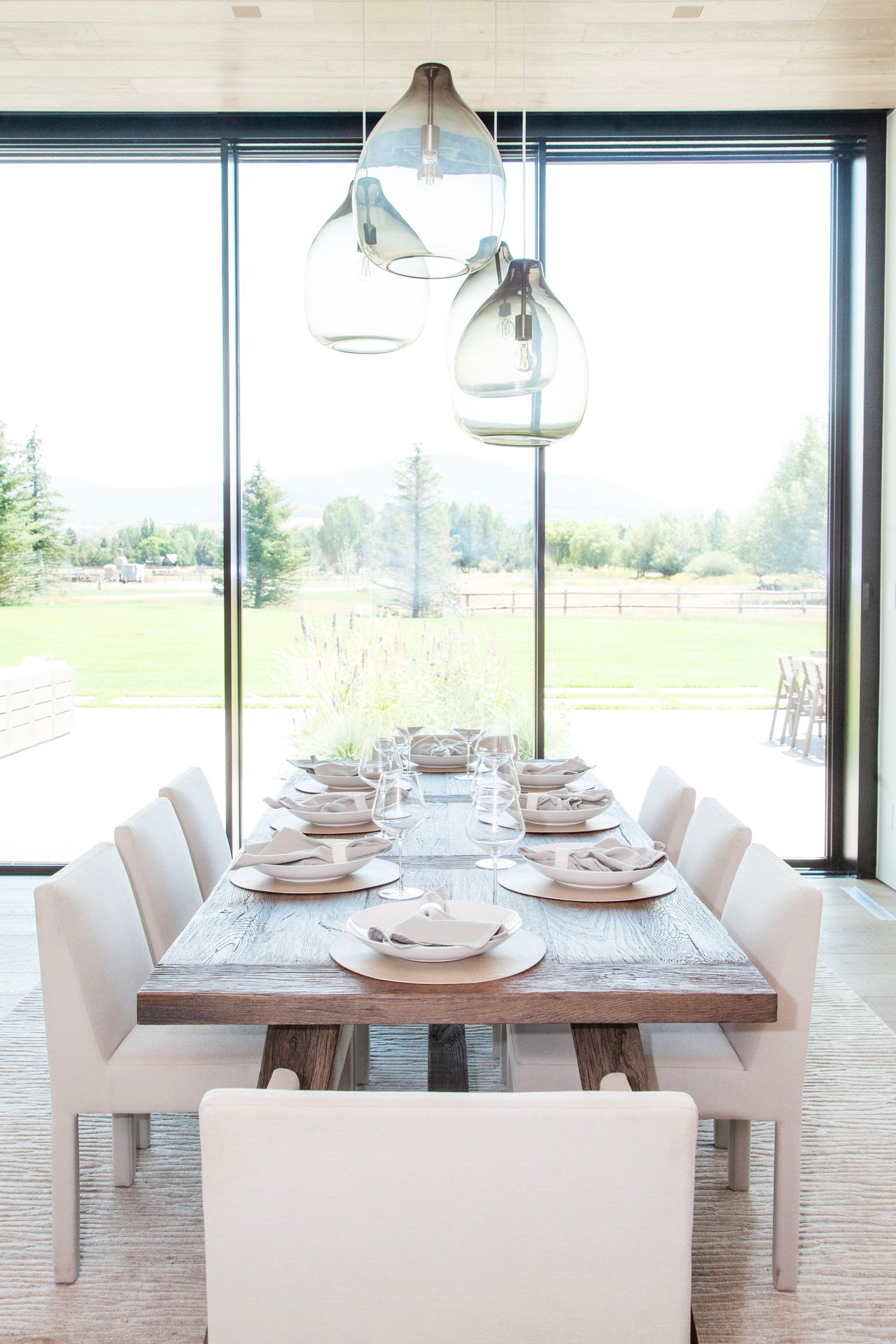
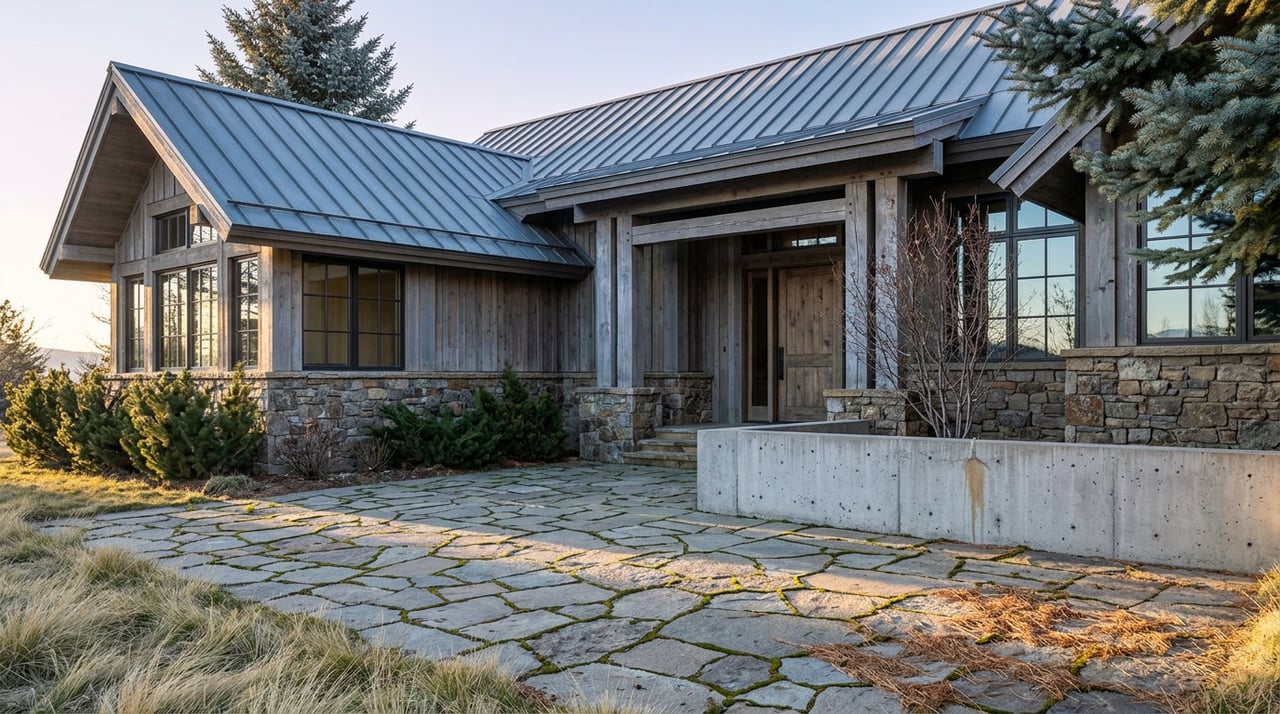
In 2017, a builder paid $8.4 million for a teardown lot on Red Mountain, cleared the existing house, and started over from the foundation up. The new home finished in 2025 at 7,200 square feet, sold furnished, and closed at $37.75 million, or roughly $5,260 per square foot. That is a strong return by any measure. But the number that matters if you are comparing Red Mountain to anywhere else in Aspen is not the sale price. It is the square footage.
Because a few doors down, and a few decades earlier, homes on the same mountain finished at two and three times that size. Same ridge. Same views south to Aspen Mountain and west to the Elk Range. Same buyer pool, arguably deeper pockets in some cases. And yet nobody building new on Red Mountain today gets anywhere close to what already exists next door. That gap is not a matter of taste or a builder holding back. It is the code.
The House You Cannot Build Today
Aspen's land use code, spelled out in Title 26 of the municipal code, has been tightened repeatedly over the past three decades, and real estate reporting on Red Mountain consistently puts the current allowance for new single-family construction on a typical lot at roughly 5,750 square feet. That is a comfortable home by most standards. It is a fraction of what already stands on the mountain.
The Summit House, perched at the top of Red Mountain on six acres, carries a main residence of roughly 17,000 to 18,000 square feet. Just below it, on Willoughby Way, a 22,405-square-foot home sold in April 2024 for $108 million, setting Colorado's all-time record for a residential sale. Both homes were built under permits issued long before the current cap existed. Neither could be replicated today at anywhere near that scale, on that lot, under current rules.
That is the actual product being sold when a Red Mountain listing changes hands. Not just a view, though the views do not hurt. A floor area entitlement that the city stopped issuing years ago.
| Property | Square Footage | Era | What Happened |
|---|---|---|---|
| 2025 spec build | 7,200 sq ft | Built entirely under current code | Sold furnished for $37.75 million, about $5,260/sq ft |
| Summit House | ~17,000-18,000 sq ft (main residence) | Grandfathered, decades-old permit | Long-standing anchor of the mountain's top listings |
| 419 Willoughby Way | 22,405 sq ft | Grandfathered, decades-old permit | Sold April 2024 for $108 million, Colorado's residential sales record |
Why Nobody Tears Down the Big Ones
Here is the part that explains behavior, not just price. If floor area on a legacy Red Mountain estate were simply a feature the owner could rebuild bigger with enough money, you would expect to see more teardowns among the oldest homes. You do not. The general pattern in land use law, including Aspen's, ties non-conforming floor area to the structure itself. When an older home is voluntarily and fully demolished, redevelopment on that lot typically has to meet whatever the code allows today, not the code that applied when the original permit was issued.
That single principle does more to explain Red Mountain's building pattern than sentiment or aesthetic preference. An owner sitting on a dated but grandfathered 16,000-square-foot home is not just choosing to renovate instead of rebuild out of nostalgia. A full teardown would very likely shrink the house. So the interiors get modernized, the systems get replaced, the kitchens get gutted and redone, and the footprint stays exactly where it is. The 2017 teardown that became that $37.75 million sale in 2025 makes sense in that light too. Whatever stood on that lot before was not carrying enough grandfathered square footage to be worth preserving, so the builder took the current-code route instead and competed on finish level and newness rather than size.
The specifics vary by lot, zone, and permit history, and anyone weighing a full teardown on an older Red Mountain property should work through the details with a land use attorney before assuming the existing footprint can be recreated. But as a general rule, the mountain's oldest, largest homes tend to stay exactly the size they were built, and that is by design rather than accident.
The Summit House adds a second, separate layer of scarcity on top of the floor area question. The property sits at the highest private point on the mountain, and the land immediately above it belongs to the Bureau of Land Management and the National Forest Service. As the listing agent put it when the home first came to market, "no one can build above this lot." That is a view that cannot be blocked by future construction, regardless of what happens to the zoning code elsewhere on the mountain. Floor area scarcity and view scarcity are two different mechanisms, and on a handful of Red Mountain's most significant properties, they stack.
What the Numbers Confirm
In 2025, Red Mountain properties averaged $22.38 million, with price per square foot for signature estates regularly running $4,000 to $7,000 and higher. Roughly 30 homes sold across the entire neighborhood that year, and half traded above $15 million. That is a thin market by any definition, and it gets thinner once you filter for the specific combination that actually drives the top of it: grandfathered scale on a lot with protected sightlines.
None of that is explained by prestige alone. Plenty of Aspen addresses carry prestige. What Red Mountain has that most of the rest of the valley does not is a fixed, non-renewable supply of large floor plans that the city will not permit again, sitting on some of the only land in town where nothing new can rise above the roofline.
What This Means If You're Looking at a Red Mountain Listing
If you are comparing a Red Mountain estate to a newer-code property elsewhere in Aspen, square footage should not be read as a simple line item. A grandfathered 15,000-square-foot home is not just larger than what you could build today. It is a category of asset the city has stopped issuing permits for, and that gap widens with every additional round of code tightening rather than closing.
For sellers holding one of those legacy properties, the floor area itself is often the most durable part of the value proposition, more durable than a finish level that will eventually read as dated. That has a practical consequence worth raising with your broker and your land use counsel before deciding how far a renovation should go: updating systems, kitchens, and interiors generally preserves the entitlement, while a full rebuild risks resetting the home to whatever the current code allows on that lot, which on Red Mountain is almost always smaller than what already stands.
For buyers, it means the newest, best-finished home on the mountain and the oldest, least-renovated one are not competing on the same terms. One offers turnkey living at a price per square foot that reflects scarcity of a different kind, immediacy and design. The other offers scale that cannot be recreated at any price, on any lot, under today's rules.
A Few Questions Worth Asking
Does owning an older Red Mountain home mean the floor plan is frozen forever? Not entirely. Additions and remodels within the existing footprint are often workable. What typically is not workable is a full teardown that assumes the same total square footage can simply be rebuilt from scratch under today's code.
Is Red Mountain's price growth about the view or the entitlement? Both, and they reinforce each other. The land itself is limited, with a handful of properties enjoying permanently protected sightlines because of adjacent public land. The floor area attached to existing homes is equally limited, since the city is not issuing new permits at that scale. Buyers are effectively paying for two forms of scarcity at once.
How much new opportunity actually exists on the mountain in a given year? Very little. With around 30 sales across the entire neighborhood in 2025 and half of those above $15 million, most of what changes hands is existing grandfathered stock rather than new construction, which keeps the mechanism described here relevant to nearly every transaction on Red Mountain rather than a small subset of them.
If you are weighing a Red Mountain property, whether you are trying to understand what a specific listing's square footage actually represents or you are sitting on a legacy home and deciding how far a renovation should go, that is a conversation best had before an offer gets written, not after. Carrie Wells has spent more than three decades working Aspen's most exclusive addresses and can walk through the entitlement history behind a specific Red Mountain property, what it means for your negotiating position, and how to prepare a legacy home for market without giving up the floor area that makes it valuable in the first place.