
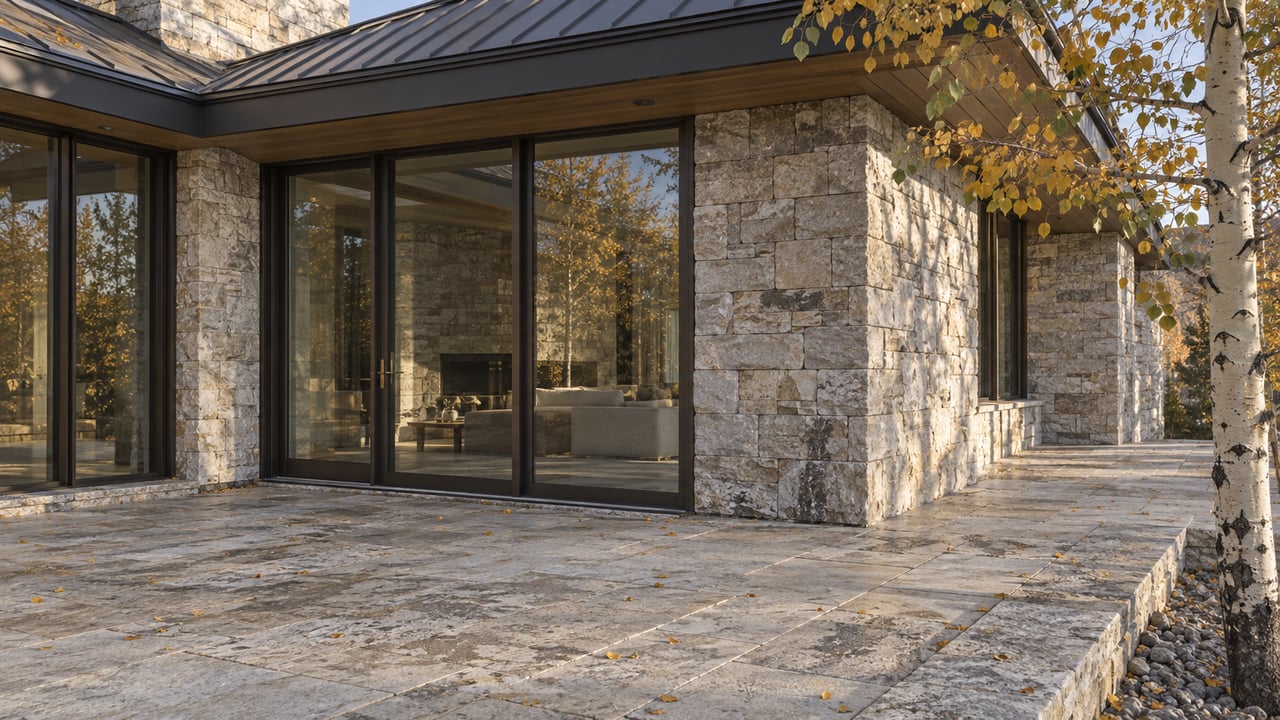
The aspens along Hunter Creek did not wait for their usual signal this year. Neither did the bears.
Both are responding to the same dry summer, and both are doing it on the same quarter mile of trail that starts a few blocks up Red Mountain Road. That is not a coincidence worth a passing mention. It is the same forest failing to do two different things it normally does without anyone noticing, and this week, on this trail, you can see both failures at once.
A Trail That Climbs Through Its Own Weather
Hunter Creek is not one hike. It is several, stacked by elevation. The lower stretch off Lone Pine Road climbs roughly 460 feet in under two miles, an easy grade along the creek that most people can do in an hour. Keep going, past the bridges and the old homestead flats, and the trail steepens toward Van Horn Park, which sits near 9,900 feet. The upper approach off Red Mountain Road, a mile up and then a right onto Hunter Creek Road, gets you there faster if you are driving rather than walking the whole thing from town.
That gain, close to two thousand feet from the valley floor to Van Horn Park, means the trail runs through more than one microclimate at once. Higher ground cools first and turns first. It also, in a drought year, drops its leaves first.
Aspen's fall color was forecast to peak somewhere between September 16 and October 1, according to reporting in the Aspen Times, with the state's meteorologists pointing to elevation as the main variable in how fast that happens. A separate forecast published in early September put Aspen and Crested Butte specifically in a September 18 to October 1 window. Today falls inside both estimates, which means Van Horn Park and the upper meadows may already be thinning out while the creekside stretch near town is still turning.
That staggering is normal most years. What is not normal is how fast the color is moving through each zone. Adam McCurdy, forest and climate director at the Aspen Center for Environmental Studies, told the Aspen Times that drought-stressed trees are dropping leaves early because they are conserving water, not because autumn arrived on schedule.
"This isn't the normal, prolonged and orderly shutdown that trees typically go through in the fall."
Practically, that means don't wait for a weekend that looks perfect on a calendar. If you're planning to walk the lower section for color, this week is closer to the end of the window than the middle of it, especially above the first mile.
The Same Dry Summer Thinned the Bears' Food Supply
Drought also explains why bear reports have climbed this year. Aspen's serviceberry crop held up better than in other parts of the Roaring Fork Valley, but the city's wildlife coordinator found acorns sparse on oaks around town. Fall is when acorns and other high-calorie foods matter most, and it is also when black bears enter hyperphagia, a stretch of up to twenty hours a day spent searching for food, with needs that reach about twenty thousand calories a day before denning. Where natural food runs short, bears range closer to trash, coolers, and compost.
The county's numbers reflect that shift. As of August 21, Colorado Parks and Wildlife had logged 260 reports of bear-caused property damage in the county, double the total from the same point in 2025. Statewide, CPW had received 6,129 bear sighting and conflict reports by August 13, nearly double the 3,115 logged over the same stretch the year before, and already ahead of the 5,299 reports for all of 2025 combined.
Some of that activity has landed close to Hunter Creek's own footprint. In mid-August, wildlife officers located and euthanized a bear involved in an incident in Rio Grande Park, at the trail's southern connection point. Sant Ambroeus in downtown Aspen posted footage of a bear break-in earlier that same month. At the Hickory House, bears getting into coolers and trash out back has been part of doing business for close to thirty years, according to reporting in the Colorado Sun, but this year the frequency is different, not the fact of it.
Wildlife officials attribute the increase to food supply rather than any change in bear temperament. The drought stressing the aspens above Van Horn Park is the same one that thinned the berries, nuts, and grasses bears rely on.
What Changes on the Ground for the Next Few Weeks
The practical shift is smaller than the headlines suggest, but it is real. Hunter Creek's lower section requires dogs on leash for the first stretch, and most hikers let them off once past that point, which is exactly the kind of habit worth reconsidering while bears are ranging wider than usual for calories. Lara Xaiz, the city of Aspen's wildlife coordinator, has been telling residents that screens do not stop a determined bear and that doors and windows need to be latched, not just closed, at night and when a house is empty. That guidance was aimed at homes in town, but the same drainage that runs past those alleys is the one your trail follows uphill.
Aspen, Basalt, and Snowmass Village have launched a coordinated campaign this year specifically to reduce these encounters, on the theory that consistent behavior across the valley matters more than any single household's habits. For anyone walking Hunter Creek regularly, that means securing trash before a morning hike, not leaving pet food on a porch overnight, and treating the creek corridor itself, not just the alleys downtown, as bear country through the next several weeks.
The color will finish its run either way. What is worth paying attention to is that this year's version of both stories, the early leaves and the hungrier bears, traces back to the same missing rain, on the same piece of ground most Red Mountain households already walk without thinking twice about it.
For guidance on Red Mountain and the rest of Aspen's neighborhoods, from what's changing on the trails to what's changing in the market, Carrie Wells is a straightforward resource to have on hand.
This article is general information, not legal, tax or financial advice. Consult a qualified professional about your situation.