
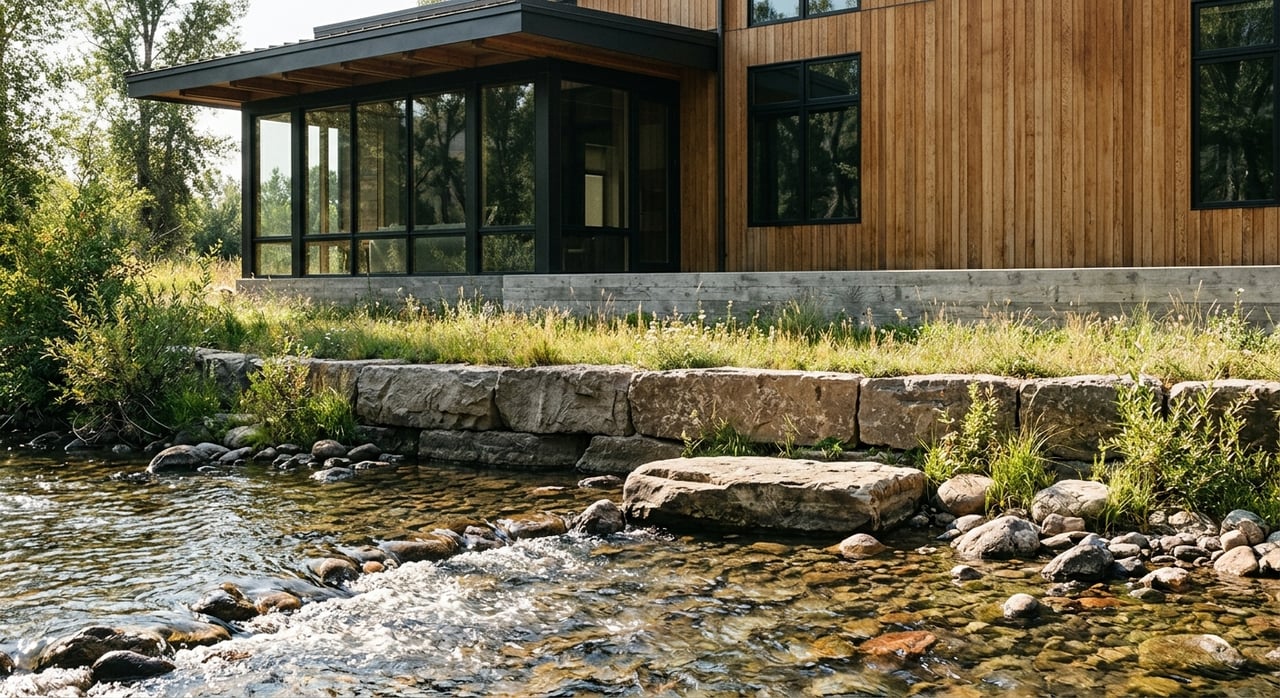
If you are looking at Woody Creek river and ranch properties, you are not just buying a home. You are buying into land, water, access, privacy, and a rural setting where parcel details can shape daily life as much as the architecture itself. For discerning buyers, that means the smartest move is to understand how a property actually functions before you fall in love with the view. Let’s dive in.
Why Woody Creek appeals to buyers
Woody Creek offers a distinct setting within the Roaring Fork Valley. Pitkin County’s master plan describes the area as a rural residential landscape centered on open space, agricultural land, wildlife habitat, low traffic, and slow growth. That long-standing planning framework is part of why buyers are drawn here in the first place.
For you, that means value often extends beyond the house itself. Privacy, adjacency to open space, and how a parcel fits the surrounding landscape can matter just as much as square footage or finish level. In Woody Creek, context is part of the asset.
Land use shapes the ownership experience
Not every Woody Creek parcel offers the same development potential. The local master plan identifies Rural Residential and Agricultural/Wildlife Reserve as key planning contexts in the area. Rural Residential land supports very low-density development, while Agricultural/Wildlife Reserve is preservation-focused and strongly discourages residential development.
That distinction matters early. A property can feel expansive and private, yet still come with important limits on what can be added, changed, or built over time. If you are evaluating a legacy ranch parcel or a river-adjacent homesite, current county code should be reviewed carefully at the parcel level.
River parcels need closer review
Riverfront in Woody Creek is not one uniform category. Some stretches near the Roaring Fork Gorge are influenced by open space, conservation easements, fishing easements, and the Rio Grande Trail. Pitkin County notes that this reach is popular with rafters, kayakers, and anglers, and the trail is used year-round for nonmotorized recreation as conditions allow.
The practical takeaway is simple. River frontage does not automatically mean the same level of privacy, access, or usable bank from one property to the next. Two homes may both sit along the water, but their ownership experience can be very different.
Access is not the same as frontage
A parcel may border the river and still have meaningful limitations on use. Public access in the broader area is concentrated in specific places, including Wilton Jaffee Sr. Park, which the Woody Creek master plan identifies as a local river-access point for anglers and boaters. That is a useful reminder that private ownership and practical river access are not always the same thing.
If you are comparing river properties, look beyond the map line. Ask how much frontage is truly usable, how private the river edge feels, and whether any easements affect your ability to enjoy the bank as you expect.
Setbacks can reduce flexibility
Pitkin County applies 100-foot stream setbacks to rivers, streams, and creeks, measured from the ordinary high water mark. The county’s riparian guidance also notes that wetlands and riparian areas are important habitat and may require greater setbacks or additional review.
This is where experienced due diligence becomes essential. A larger river lot may seem more valuable at first glance, but if setbacks, habitat concerns, or floodplain conditions reduce the buildable envelope, it can be less flexible than a smaller parcel with a cleaner site plan.
Ranch and acreage properties require deeper due diligence
With ranch and acreage properties, the core questions often have less to do with aesthetics and more to do with how the land operates. In Woody Creek, water, access, and utility systems can have a major effect on cost, timing, and long-term use. These are not minor details. They are central to whether a property performs the way you want it to.
Pitkin County’s rural-living guidance notes that public sewer and other urban utilities may be unavailable outside the urban growth boundary. Many properties rely instead on private wells, septic systems, propane, solar, or other off-grid solutions.
Wells, septic, and utility planning
For wells, the Colorado Division of Water Resources issues permits, and every new well that diverts groundwater must have one. Pitkin County also makes clear that private-well water quality is the owner’s responsibility, and the county does not test resident wells.
For onsite wastewater treatment systems, site suitability depends on factors such as soil type, groundwater or bedrock depth, stream setbacks, and slope. Pitkin County says these systems must be designed by a qualified designer and installed and inspected by licensed professionals. If you are considering land or an older ranch property, these factors deserve early review because they can change both feasibility and cost.
Water rights are separate from appearance
A ditch, spring, or pond can make a property look especially attractive, but appearances can be misleading. Pitkin County warns that a ditch crossing your land does not give you the right to pump from it. The county also notes that ditch owners may enter the property for maintenance and repair.
The same caution applies to springs, seeps, and ponds. Springs and seeps are usually subject to prior appropriation, and creating or enlarging ponds generally requires county review plus proof of adequate water rights if more than 50 cubic yards of soil will be moved. If irrigation or agricultural use is part of your vision, water rights should be verified independently and early.
Legal access cannot be assumed
Access issues can separate an excellent opportunity from a costly problem. Pitkin County’s rural guide says a new driveway requires an address and a County Access Driveway Development Permit. If access involves a state highway, a CDOT permit is also required.
For undeveloped or lightly improved parcels, legal access should be confirmed before assuming the site can be built on as planned. This is one of the most important early checks for buyers considering land, ranch properties, or redevelopment opportunities.
Rural ownership comes with tradeoffs
Part of Woody Creek’s appeal is its working rural character. That same character can also bring realities that some buyers underestimate. Pitkin County’s rural-living guide notes that ranch life can include agricultural operations, evening haying, dust, smoke, manure, and open-range livestock.
Colorado is an open-range state, so if you do not want livestock on your land, the county says you may need to fence them out. At the same time, Pitkin County limits fencing in wildlife habitat areas because fences can interfere with animal movement. For buyers seeking both privacy and a natural setting, that balance is worth understanding upfront.
Flood and runoff deserve attention
On river-adjacent and low-lying acreage, flood and runoff risk should be part of your evaluation. Pitkin County says spring streamflow can be above average, and flash flooding can occur during spring and summer monsoon seasons. The county also notes that flood insurance has a 30-day waiting period.
One detail many buyers overlook is that about one-third of flood insurance claims historically occur outside the mapped regulatory floodplain, according to county guidance. That does not mean every property carries the same risk, but it does support a more careful review of drainage, topography, and seasonal water patterns before you commit.
Design rules matter in Woody Creek
Even after purchase, ownership in Woody Creek is shaped by county standards intended to protect rural character. Pitkin County’s zoning guidance says exterior materials must comply with scenic regulations, and the lighting code is designed to minimize light pollution. These lighting rules apply generally, not only during a rebuild.
For you, this means improvements should be considered in context. Outdoor lighting, landscape plans, and visible utility choices may need to align with local standards, so it is wise to review these issues before finalizing plans for renovation, expansion, or new construction.
What discerning buyers should focus on first
When you evaluate Woody Creek river and ranch properties, start with the land before the finishes. A beautiful residence on a constrained parcel can offer a very different ownership experience than a less polished property with stronger fundamentals. In this market, the quality of the site is often what protects long-term value.
A disciplined review usually starts with a few key questions:
- What is the actual buildable and usable envelope?
- Are there stream setbacks, wetlands, or riparian constraints?
- Is river access private, practical, and as expected?
- What utilities are in place, and what will they cost to improve?
- Are water rights documented, or simply assumed?
- Is legal access fully confirmed?
- How do recreation, trail use, or nearby open space affect privacy?
- What rural maintenance and seasonal conditions come with the parcel?
These questions are especially important in a place like Woody Creek, where scarcity, beauty, and land-use nuance all intersect. The right property can be extraordinary, but only if the fundamentals match your goals.
If you are considering a Woody Creek purchase and want candid guidance on how a property truly lives, Carrie Wells offers experienced, high-touch representation grounded in local knowledge and clear-eyed advice.
FAQs
What makes Woody Creek river properties different from one another?
- River properties in Woody Creek can vary significantly based on easements, trail proximity, privacy, bank usability, stream setbacks, and habitat constraints.
Can Woody Creek river frontage guarantee private access?
- No. Frontage does not automatically guarantee private or practical bank access, and easements or public access points in the area can affect use.
What should buyers verify on Woody Creek ranch land?
- Buyers should verify legal access, utility availability, well and septic feasibility, water rights, and any land-use or environmental constraints affecting the parcel.
Can a ditch on Woody Creek property be used for irrigation?
- No. Pitkin County says a ditch crossing a property does not by itself give the right to pump from it, so water rights must be confirmed separately.
Are flood risks only a concern inside mapped floodplains in Woody Creek?
- No. Pitkin County notes that flood impacts and insurance claims can also occur outside mapped regulatory floodplains, so broader runoff and drainage review is important.